

Las Vegas was a fitting destination for the 2026 Seahawks. Getting a clear read on this team is like trying to predict which number the roulette ball is going to land on. Spin the wheel and you get a different quarterback. Spin it again, and you get a different right guard or left guard or left tackle. Keep spinning and you get a different running back or two. Getting the same result twice with this team feels like as much of a longshot as having the ball settle into the same slot twice. This game was dizzying in its own right. An early pratfall by Drew Lock led to a red zone touchdown for the Raiders. Trailing 10-7 at halftime, the Seahawks paid homage to another part of Nevada by going nuclear in the third quarter. It ultimately took a heady special teams play by Tory Horton and a gutsy play call by Brian Fleury to seal the deal.
Betting on this Seahawks team has largely been a dart throw. There are some signs, though, that they are figuring out a few things that could allow them to make a run to end the season that sparks memories of how they finished a year ago. Foundational to any chance at consistent quality play is the quarterback position.
Lock had his first two turnovers of the season in this one. The first felt more egregious, as he tried to save a sack by shoveling the ball forward to his tight end, but fumbled instead. It was notable not just because it was a turnover, but because it was one of the first clearly bad judgment calls he has made in four games.
He still is yet to have thrown an interception, and was only truly sacked once in this one (both fumbles counted as sacks). Detractors have pointed to his conservative performance against the Cardinals a week earlier as evidence that he is not capable of the big plays a quarterback needs to make in order to beat tougher defenses. He answered that by making a series of fantastic throws in this game, both in and out, of the structure of the offense.
His team has won every game has played the majority of snaps this season. He boasts the highest passer rating and epa/play of any quarterback in the NFL. He has the second-highest PFF grade after Joe Burrow. Even when you adjust for the opponents he has faced, his performance has been exceptional.
Other quarterbacks who have faced New England, Arizona, and Las Vegas have posted roughly half the epa/play that Lock has. Of the quarterbacks who have faced Arizona and Las Vegas (no other QB has faced those teams and New England other than Lock), only Brock Purdy has a higher epa/play. Lock’s numbers are roughly double Matthew Stafford’s when playing the same opponents.
All of this is mostly moot as Mike Macdonald has made it clear that Sam Darnold is expected to practice fully next week and start against the 49ers. My general assessment is that Lock’s ceiling may not be high enough to beat the best teams, but that his floor has been far higher than Darnold’s this season, and Darnold has hit his floor far too often.
While the 2025 squad did need the ceiling of Darnold to beat the Rams in the NFC Championship, that was more the exception than the rule. Darnold and the offense was largely less efficient and effective the back half of the season while the team ran off 10 straight wins.
What he did well was limit his turnovers, and help the run game get going late. It feels more important that the quarterback for this team does not lose the game with turnovers than that they win the game with highlight touchdowns.
A conservative game would not have been enough in those Rams games late last year when they put up a thousand yards of offense combined, and the same could be said for the Bears game this season, to a lesser extent. Simply eliminating turnovers would not have been enough to beat Chicago that night. It might, however, have been enough to beat the 49ers, and almost certainly would have been enough to beat the Broncos.
No matter where you fall on the quarterback conversation, it is clear that this team does not have enough of a margin for error to endure multiple turnovers by their quarterback and a poor run game and bad red zone defense and mediocre special teams. If you could only fix one of those problems, the run game probably comes first given the ripple effect on everything else, but the turnovers are the biggest impediment to winning.
Even in Darnold’s best game this season, against the Chiefs, he still made an inexcusable judgment error in the red zone before halftime. It feels hard to imagine he can go from the amount of poor decisions he has made in his six games this season to playing consistent clean football the rest of the way. His backup has provided an opportunity for redemption by winning all these games. It falls to Darnold to make the most of it.
Signs of change
It might seem wrong to spend so much time on offense, when the defense is having a historic season. The reality is the prospects for this team are tied tightly to whether the offense can allow the all-time defense to win games.
There are some indications that Fleury and the coaching staff have made some adjustments coming out of the mini-bye week following the Thursday night loss to the Broncos. After four straight negative offensive performances, Seattle has posted three positive epa/play games out of their last four. That has moved them from one of the worst offenses in football to a bit above average.


| EPA per play | Weeks 1-6 | Weeks 7-10 | Rank change |
|---|---|---|---|
| All plays | -0.0624th | +0.0513th | ▲ 11 |
| Passes | +0.0519th | +0.196th | ▲ 13 |
| Runs | -0.2030th | -0.1024th | ▲ 6 |
Data: nflverse play-by-play.

A little above average might sound like faint praise, but consider that the Seahawks finished 14th in epa/play last season. From weeks 12-18, they were 15th. They won every one of those games.
It is also interesting to see the passing game rise to 6th over that period of time. Keep in mind, that is two games with each quarterback. It is also two games without Rashid Shahid, and two games with him. Horton’s snaps started climbing in week six after the Elijah Arroyo injury. It feels less about personnel and more about schematic shifts.
One tangible example is how Fleury has incorporated more RPO (run-pass option) plays in place of under-center play action. This started happening after the 49ers game.
Seattle ran nearly as many RPO plays in Denver (7), as they had all season (8). They have nearly tripled their RPO usage since from week six on. Teams started blitzing Seattle on early down under-center plays. Blitzes had been happening about 46% of the time through week five. That jumped up to 73% after week six. Even when Seattle was able to block up the pressure, defenses started shifting their coverage plans to make under-center play action less effective. They kept a safety in the box and played more man coverage.
The RPO neutralized the blitzing tactic. Teams only blitzed Seattle on 3 of their 26 RPO play from week six through ten. The heavier boxes from defenses got punished to the tun of a 65% success rate (2nd best in the NFL). In fact, the only RPO that has not gained at least some yardage was the fumble in the red zone when Lock and Charbonnet collided. Horton was open for a touchdown on that play.
Data: FTN charting, nflverse play-by-play.
There has also been a dramatic lift in the efficiency of three wide receiver sets (11 personnel). That is always the most common personnel package for any team, even if Seattle uses it less than almost anyone. It had been a largely ineffective package, even dating back to last season. All of a sudden, it’s skyrocketing.
| In 11 personnel | Weeks 1-6 | Weeks 7-10 |
|---|---|---|
| Passes | -0.1128th | +0.342nd |
| Runs | +0.064th | -0.1123rd |
| Success rate | 35%30th | 47%6th |
Data: nflverse play-by-play, Sumer Sports (personnel, time to throw, routes), FTN charting (RPOs).
A big part of the jump is eliminating sacks with quick throws. Fleury has incorporated more quick developing route concepts like slants, hitches, and throwing to the flat. That has meant they went from 11 sacks in 130 dropbacks when using 11 personnel through week six to just one sack in 76 dropbacks from week seven on.
They have also connected on more deep passes in this grouping, so the quick passes have not just turned them into a dink-and-dunk passing offense. In fact, explosive passing went up with this change, from 6.2% (25th in the NFL) to 10.5% (9th).
Many thought it was odd that Fleury brought up 3rd down as the area that he would pick to make major improvement because it seemed to overlook the fact that 3rd down problems were at least partially caused by early down inefficiency. Well, Fleury decided to fix 3rd down anyway.
Data: nflverse play-by-play.
Seattle went for 29th in 3rd down efficiency to 3rd since the mini-bye. They have had three games of 50%+ conversation rates, after having only one in their first six games. That 51% conversion rate over the past four games includes a 1 for 11 performance against the Bears.
They have become better on short yardage conversions (30th to 2nd) and long conversions (22nd to 1st). Many of the 3rd and long conversions came against the Chiefs, but not all of them.
This is what Mike Macdonald is talking about when he mentions problem solving. It is also evidence that Fleury is not out of ideas or dogmatic about how the offense needs to be run. They are actively looking for ways to get the offense back on track. He has one truly impressive game on his resume when he outcoached Steve Spagnuolo versus Kansas City. He will need to do that again, and again, to earn fan trust and more importantly, player confidence.
The Charbonnet effect
One of the things working in Fleury’s favor is that Zach Charbonnet has not only returned, but is playing at a high level. He has been a big shot in the arm for the run game, and is the only runner on the roster who is elevating the blocking in front of him.
Charbonnet is not only gaining more yards before contact than other runners, but he gains nearly a half-yard more than any other Seahawks runner after contact. He is rarely taking negative plays. That has always been a strength of his, and his explosiveness has always been underrated.
He was more explosive than Kenneth Walker III until you got over 30+ yard runs. That is where Walker’s breakaway speed separated him, but there are only a handful of runs that long for even the best backs each season. Busting out a 25-yard run like Charbonnet did in Vegas is plenty valuable.
Data: Sumer Sports, nflverse (success rate).
Jadarian Price has been a positive addition as well. He scored his first touchdown in this one, showcasing the speed and vision that was lacking for other runners earlier this season. One area he needs to grow in is yards after contact. He too easily gets taken down on first touch. There are few running plays in the NFL where nobody is going to get a hand on you. He did demonstrate some of that power at times in college.
He has done a better job protecting the football since his return from injury. When you remove the fumbles from running plays that pull down epa/rush, a clear picture emerges about where Seattle has had their most success running the football.
Data: nflverse.
Charles Cross is expected to come back after the bye week, and not a moment too soon. Abe Lucas was lost to some sort of ankle injury, and despite what the numbers show, he has been one of the best run blockers on the line.
The assumption is Josh Jones will shift from left to right in his absence with Cross returning to left tackle. The open question remains when Quenton Nelson will return. The shuffling of the offensive line is a major hurdle toward the team finding its footing the rest of the way.
A possibly unrealistic best case scenario would be that Nelson returns soon and helps form the best left side of a Seahawks offensive line since Walter Jones and Steve Hutchinson, Jones becomes an immediate upgrade in pass protection at right tackle and is at least as effective in run blocking there as he was on the left (which was very good), and Grey Zabel steadies into the new role at right guard when he does not have to face Jeffrey Simmons, and upgrades the right guard spot.
There is almost no chance that all happens in San Francisco. The goal is to win enough games that by the time they gel a bit later, the team can realize the benefits heading into the playoffs.
Combine that with the increased use of RPOs, better 3rd down offense, and improved backfield leading to a better run game, and this could get interesting.
Oh, and just for good measure, the Seahawks may have the best kept secret in the NFL at tight end.
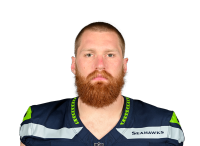
 SEA·8 of 91 run blocks
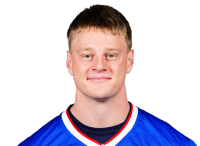
 BUF·13 of 171 run blocks
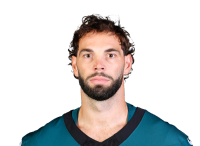
 PHI·8 of 108 run blocks
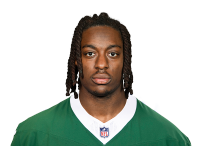
 NYJ·7 of 96 run blocks
 LAC·10 of 143 run blocks
Meanwhile, the defense is allowing the fewest yard through 10 games of any defense since 1999. They hope to get Leonard Williams back, but the timetable is unknown. It is hard to imagine beating the 49ers without him. Byron Murphy II is playing fantastic football. Derick Hall has quietly increased his pressure rate, and Dante Fowler Jr. earned some additional early down snaps by tallying a TFL and a sack.
Macdonald gave us our once-a-year taste of Devon Witherspoon as a blitzer, and it was something Fernando Mendoza will not soon forget.
The Arizona game was a 27-0 type of game that was marred by awful officiating. This was a 30-10 type of game that turned on a fluky fumble on a would-be touchdown and a missed field goal. The style points have not been there, but some of the underlying indicators are pointing in the right direction.
Seattle does not look like they are ready to face a team like the 49ers. Then again, they didn’t look like a team ready to face the Chiefs before putting together their most complete game of the season. Macdonald is very tough to beat in any game, but becomes especially tough when he gets extra prep time.
The Seahawks left Vegas with a win. Few get to make that claim. The odds remain against them, but they have a trophy that proves the house does not always win when it comes to this team.
Note: This column was delayed this week due to travel